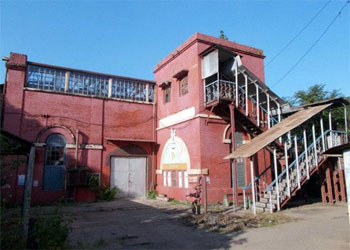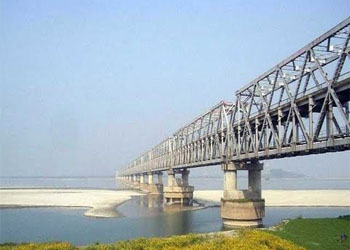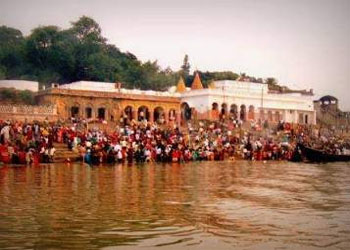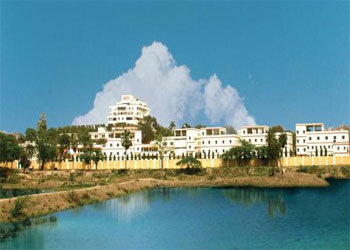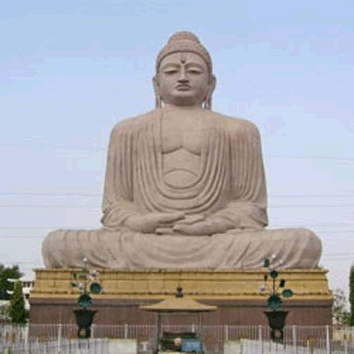
Munger is a twin city and a Municipal Corporation arranged in the Indian province of Bihar. It is the managerial central command of Munger area and Munger Division. It is the seventh biggest city of Bihar and second biggest city in Eastern Bihar.
Verifiably, Munger is known for being an old seat of principle. The twin city includes Munger and Jamalpur arranged on the southern bank of the waterway Ganges. It is arranged 60 km west of Bhagalpur, and 180 km east of capital city Patna.
The Fort's history has been followed from 1330 AD onwards, under the standard of Muhammad receptacle Tughluq of Delhi. Be that as it may, its old history, as a town, for the most part governed by Hindu rulers, is at first followed from a stone engraving to Chandra Gupta Maurya (fourth century BC), (after whom it was at first called Gupta Garhis) and later dated to the kingdom of Anga, the capital of which was at Champa close Bhagalpur, and the Pala rulers in the ninth century AD.
History of Munger
Medieval period Munger, which was under the standard of the Karnataka tradition of Mithila, was assumed control by Bhaktiyar Khalji in 1225 AD and in this manner under the Khalji ruler, Gyasuddin Khalji.
Muhammadan guideline For a concise period, it went under the control of Sultan of Bengal between 1301 AD and 1322 AD, following a harmony arrangement with Khaljis. This was trailed by addition of the region to Delhi by Muhammad receptacle Tughluq, amid 1342 AD.
Engravings uncover that fixes were done to the fortress amid the rule of Prince Danyal of Bengal (child of Bahlol Lodi) who held the post of Governor of Bihar, after the annihilation of Jampur rulers by the Sultan of Bengal. It is additionally expressed that Prince Danyal of Bengal manufactured the hallowed place of Sufi holy person Shah Nafah inside the south entryway of the fortification, in 1497 AD.
Suri Empire rule In 1534 AD, in a fight which occurred in the fields of Surajgarha, the considerable armed force of Ibrahim Khan of Munger was vanquished and he was executed by Sher Shah Suri who set up the Suri Empire. Along these lines, the fortress went under Sher Shah Suri's overlordship (1486 - May 22, 1545). In the consequent war that occurred between Sher Shah and Humayun, the Mughal Emperor, Munger was the focal point of fight between the Afghan and the Mughals. Sher Shah won and the Mughal rule was substituted by Afghan rule.
In 1590, the significance of the fortress was improved by making it the base camp of Bihar armed force of the leaders of Gaur under their general named Kutub Khan. Nasrat Shah had succeeded Hussain Shah in Bengal and his brother by marriage, Makhdun Alam, was given control of the Munger fortification, which he thusly passed on to his general Kutub Khan.
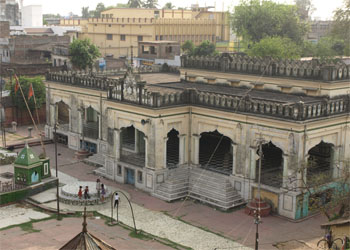
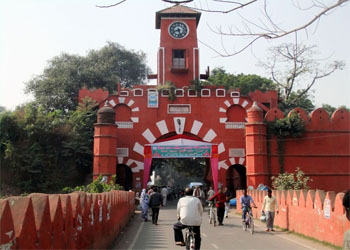


.
Mughal rule From the season of the reign of Akbar in the late sixteenth century, Monghyr was controlled by the Mughal Emperors. Raja Todar Mal, Minister in the Mughal realm had stayed outdoors at this post when he was deputed to put down the agitator powers of Bengal. He generously restored the strongholds of the fortification. After a progression of intruging changes in the governorship of Munger Shah Shuja, the second child of Shah Jahan, the Mughal Emperor and Aurangzeb's sibling, had fled to this place to escape mistreatment, amid his battle with his siblings for power. He was made legislative head of the area after extended arrangements with his siblings Dara Shikoh, Murad and Aurangzeb, and under the bargain of 1658 Munger was added to Shuja's rule. Shuja assembled a castle on the west side of the post, which has been portrayed as " vast house where the ruler (Suja) lived, walled alongside the waterway, for around one and half Kos with blocks and stones, with a divider fifteen yards high."