History of Gujarat
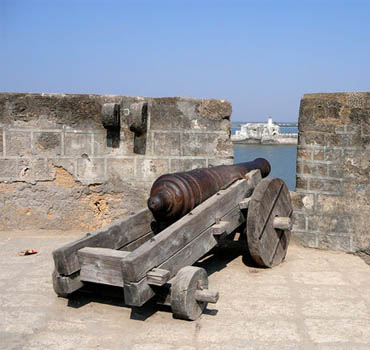
The history of modern Gujarat began with the arrival of European people in 1614 AD. The era of modern Gujarat began for the first time when the Portuguese established many enclosures along the coast of Gujarat. The Portuguese nowadays built naval ports in Daman and Diu, Dadra and Nagar Haveli.
The British East India Company established its first base in Surat in 1614 in India. Such small commercial programs eventually led the company to a major presence in India. Many of the local Maratha rulers of Gujarat accepted British sovereignty in lieu of maintaining local independent rule. The British authorities' rule confirmed one of the many routes of modern Gujarat.
During the administration of the British Raj, the Indian independence movement was very active in Gujarat. All Gujarati was the greatest Mahatma Gandhi in the Indian freedom fighters. He had joined his great work by other Gujarati freedom fighters like Sardar Vallabhbhai Patel, Morarji Desai, KM Munshi, Narani Parikh, Mahadev Desai, Mohanlal Pandya and Ravi Shankar Vyas.
Mahatma Gandhi led the salt Satyagraha in Gujarat. It was one of the most visible images of Gujarat during Independence Day. Modern Gujarat still shows the disturbance of such a mindless surrender that has helped contemporary Gujarat grow in the industrial powerhouse.
Gujarat saw big bounce after independence. After independence, Gujarat was included under the old Bombay state. In the Bombay state, a Gujarati-speaking person was speaking Marathi in the north and south. Finally, the boundaries of the Bombay state were fixed in Mumbai and Maharashtra states. Thus, modern Gujarat was made its capital with Ahmedabad.
The capital was shifted from Ahmedabad to Gandhinagar. Gandhinagar is the current capital of modern Gujarat.
Places to visit in Gujarat
Gir National park: One of the biggest domains of cruel Asian animals, Gir National Park is a bright diamond in the jewelry of Gujarat. With lions, this dry deciduous forest is home to more than 300 avian species, such as the great horns, other cat family members such as the Crystalized Serpent Eagle and Leopard. According to the records of forest department, there are 29 species of reptiles, 33 species of mammals, 93 species of irreversible species, 9 6 trees and 448 flower plants.Apart from this, the National Park is remarkable for its silk cotton trees; Whose bright orange flowers add color dashes to this dusty brown landscape. The best time to go for Jeep Safari in Gir National Park is between March and May.
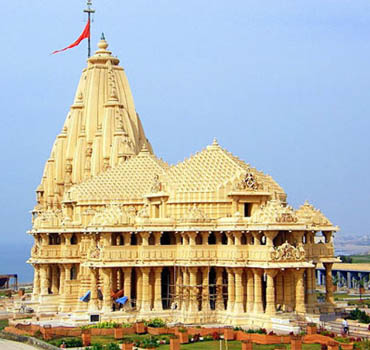
Somnath: Somnath, a holy city in Junagadh district, is considered one of the places where Lord Shiva's Jyotirlingas are kept. This temple is the center objective of all the closest travelers and travelers of the city tour. Despite this fact, the Somnath temple is a well-known holiday destination, and another reason may be its picturesque area near the hill. Along with this, visitors can spend some wonderful time on the beach too. Junagadh Gate and Punch Pandav Cave (Cave) are the acclaimed traveler targets in Somnath.
Marine National Park: If you have gone many times for wildlife reserves and are looking for something new in this weekend, then it is time that you should be present in India's first Marine National Park on the coast of the Gulf of Kutch. This national park is one of its types because it preserves marine life, in which corals, dungongs and small satanas (Finace p orpose, common dolphins, bottlose dolphins, Indo-Pacific humpback dolphins), blue whales, sei whales, humpbacks such as big Whales are included. Whales, and sperm whales.
Manek Chowk: The attractive and famous Open Square market, near the city center point, serves as a vegetable market in the morning and works as a jewelry market in the afternoon, the second largest market in India, clearly marked by the annual turnover 3 million rupees.
How to reach Gujarat
How to reach Gujarat by Railways: The railway network of Gujarat connects every state of India. Surat Railway Station, Ahmedabad Railway Station, Rajkot Railway Station and Vadodara Railway Station are the busiest railway stations of Gujarat. In fact, Vadodara railway station is one of the busiest railway stations in India because it is part of the Delhi-Mumbai railway line.
How to reach Gujarat by Airways: Major airports in Gujarat are Surat Airport, Bhavnagar Airport, Deesa airport, Rajkot Airport, Porbandar Airport.
Gujarat is well connected to national and international flights for all major states of India and abroad. Nearly every airway company has its own operating system from Gujarat. Surat, Bhavnagar, Junagadh, Vadodara, Keshod, Kandla, Rajkot and Bhuj are the major locations where the domestic airports are stationed. Ahmedabad is the only international airport. Gujarat Civil Aviation Board (GUJCAB) is responsible for the development of aviation infrastructure.
How to reach Gujarat by Roadways: All national and state highways in Karnataka are smooth and well maintained. Many bus services from neighboring states - Rajasthan, Maharashtra and Madhya Pradesh are easily available. From Volkswagen, owned by private transporter to comfortable buses, there are many ways of road transport to reach Gujarat. For travelling within the state numerous bus services are started by Gujarat State Road Transport Corporation (GSRTC). The transport corporation not only offers transportation services in Gujarat but also to other states in India.
Best Time to Visit Gujarat
October to March is the best time to visit Gujarat.
Summers in Gujarat (March till June): Summer in Gujarat is dry, humid and sunny. In the summer season the temperature ranges from 41 ° C to 29 ° C at in the night. Summer marks in Gujarat from April to May. However, this is not an ideal time to plan a trip to Gujarat.
Gujarat in Monsoon (June - September): In Gujarat the rainfall pattern varies widely according to this region, and the north is dry compared to the south. The average rainfall is between 36 to 150 centimeters, but in some areas such as Saurashtra and Kutch, there is less rainfall than average rainfall.Several major cities of Gujarat like Ahmedabad, Jamnagar and Kutch have to face the shortage of water just before the monsoon, and in the early days of monsoon it is advisable to avoid these areas. This is not a good weather for water sports because the sea is not calm and most of the facilities are closed during the rain.
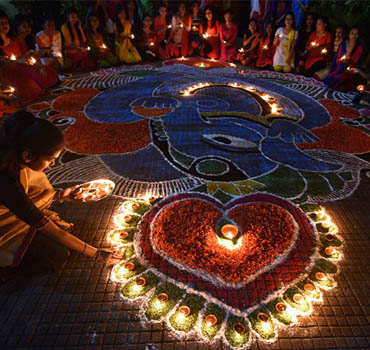
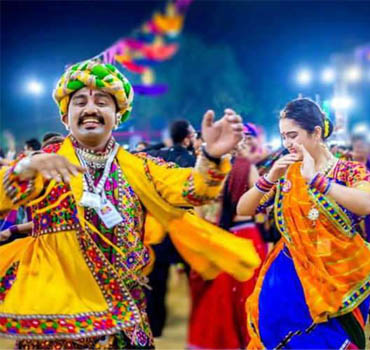
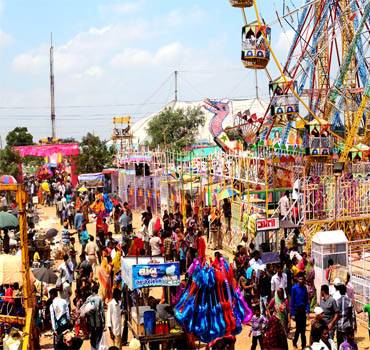
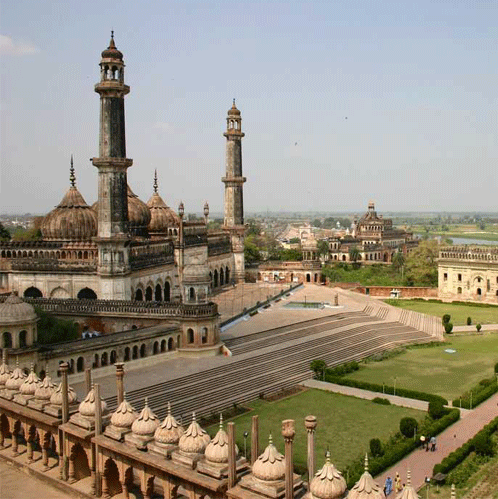
Gujarat in winter (November - February) In Gujarat, the winter is dry and pleasant. The temperature is average between 29 ° C and 12 ° C, respectively during day and night. It is the best time to visit sights and temples, ancient ruins and monuments in the cities. During the winter, many festivals and fairs are organized which make it a culturally rich experience. Winter lasts from November to February, but during this season many popular tourist sites can be crowded. It is best to avoid long holidays and weekends because they are particularly busy.